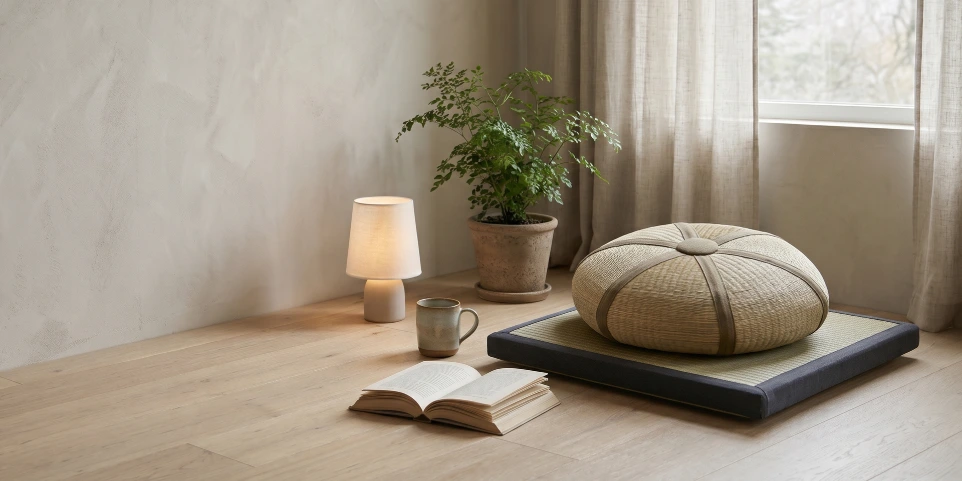
Have you ever wondered what actually goes into making a Tatami Mat? Most of us notice the woven surface, its natural texture and that familiar Japanese aesthetic. But there is quite a bit happening underneath.
Traditional Japanese Tatami has been around for centuries, yet the way it is made has evolved alongside modern homes and lifestyles. From natural rice straw cores to engineered materials, today's Tatami Mats come in more variations than you might expect.
So, what exactly has changed? Let's take a closer look.
First, What Makes Up a Traditional Tatami Mat?
Before comparing traditional and modern Tatami, it helps to understand its three main components.
A traditional Japanese Tatami Mat consists of:
Doko (畳床): The inner core that provides the mat with its structure, thickness and support.
Omote (畳表): The woven surface, traditionally made from natural Igusa Rush.
Heri (縁): The fabric border that protects the edges while adding decorative detail.
Think of it as three layers working together. Each has its own purpose, and each has seen changes over time.
The Biggest Change? What's Inside the Tatami Core
Traditionally, the doko was made from multiple layers of dried rice straw, known as wara, compressed tightly together to create a firm and resilient base.
This construction gives traditional Tatami its characteristic weight and solid feel. The natural straw also helps absorb and release moisture, making it an interesting material in Japan's changing seasons.
Modern Tatami Mats, however, often use engineered cores made from compressed wood fibreboard, polystyrene foam or a combination of both.
These materials offer some practical advantages. They are generally lighter, more uniform in construction and easier to handle. Different combinations can also produce different levels of firmness and cushioning.
This means that modern Tatami isn't necessarily a completely different product. It simply uses newer materials to achieve a similar purpose.
The Surface Has Evolved Too, But Igusa Is Still Around
The omote is probably the part most people recognise.
Traditional Tatami uses woven Igusa Rush, a natural plant fibre known for its distinctive grassy fragrance, textured appearance and ability to absorb and release moisture.
Today, natural Igusa remains an important choice, but modern alternatives have also emerged. These include woven washi paper and synthetic fibres, which can offer greater colour consistency, different textures and easier surface cleaning.
Each material has its own characteristics. Natural Igusa offers an experience that synthetic alternatives cannot fully replicate, while engineered surfaces may be more suitable for spaces where moisture resistance or easier maintenance is a priority.
If you're curious about this natural material, here's a little more about what Igusa is and what makes it special.
What About the Tatami Border?
The heri might seem like a small detail, but it has both a practical and decorative purpose.
Traditionally, Tatami borders were commonly made from cotton or hemp fabrics, often featuring intricate Japanese patterns. They help protect the edges and corners from everyday wear.
Modern borders can also use synthetic fibres, such as polyester, which offer different price points, patterns and durability characteristics.
You'll even find borderless Tatami designs today, giving modern interiors a cleaner, more minimal appearance.
So, Which Type of Tatami Is Better?
Neither traditional nor modern Tatami is automatically better. It comes down to the materials, construction and how you intend to use it.
Traditional rice straw cores offer a distinctive natural feel and moisture-buffering properties, but they are heavier and require proper care. Modern board-and-foam cores are generally lighter and more consistent, making them practical for different installation requirements.
The surface matters too. Natural Igusa has its own fragrance and texture, while synthetic alternatives offer different maintenance advantages.
Regardless of the construction, proper care remains important. Natural Tatami, in particular, benefits from regular cleaning, good ventilation and keeping excess moisture away. Our guide to cleaning and maintaining Tatami in humid weather covers this in more detail.
At the end of the day, Tatami has adapted to changing times without losing the basic idea behind its construction. Different materials, different possibilities, but the same familiar foundation for everyday living.