If you've typed "tatami bed" into Google and come away more confused than when you started, you're not alone. Between the Western futon foldout thing from someone's sharehouse in 2009, Instagram photos of beautiful low-profile Japanese-style rooms, and mattress companies using "tatami" as a loose aesthetic label, the term has become genuinely blurry.
So let's clear it up. What a tatami bed actually is. How it's built. And how it's genuinely different from the platform bed frame that's probably sitting in your room right now.
First, the term itself
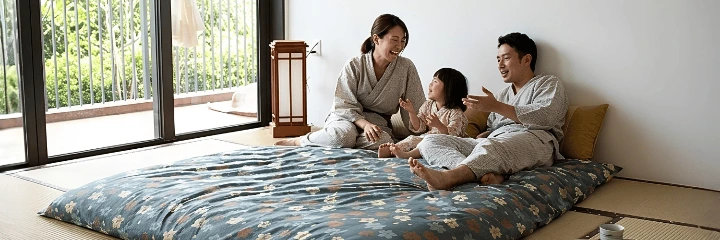
"Tatami bed" isn't traditionally a Japanese term. In Japan, you don't buy a standalone "tatami bed" you set up a sleep system on a floor crafted with handcrafted Tatami Mats.
The phrase has emerged in global markets to describe a floor-level sleeping setup that uses a woven tatami mat as its foundation. Think of it less as a piece of furniture and more as a philosophy of sleep: firm, low, natural, and minimal.
(And no, it has nothing to do with the clunky fold-out futon sofa. If you're looking for flexible day-to-night seating, check out our guide on smart floor furniture solutions for small spaces)
What a Tatami Bed System Is Actually Made Of
An authentic tatami sleep setup relies on three distinct layers that work in harmony:
1. The Foundation: A Tatami Mat
This is the defining element. Traditional tatami mats are hand-woven from Igusa rush grass, a plant cultivated in Japan for nearly two millennia. The mat sits on your floor, creating a base that is naturally firm, breathable, and subtly aromatic.
It also regulates humidity by absorbing and releasing ambient moisture, keeping condensation from trapping underneath your bed.
Material Tip: If you live in a high-moisture area or want an ultra-durable alternative, read our breakdown on natural vs. synthetic tatami options to see which surface fits your room best.
2. The Mattress: A Shikibuton or Foldable Mattress
Laid directly on the tatami mat, an authentic Japanese Shikibuton is a slim, foldable cotton mattress (typically 5 to 8 centimetres thick). It provides firm spinal support without allowing your body to sink unnaturally. Because it folds completely, you can store it away in the morning, giving you your floor space back.
Alternatively, if you want extra cushioning while keeping a low-profile aesthetic, placing a Classic 4-Fold Mattress on top of your tatami mat offers a slightly thicker, ultra-portable luxury layer.
3. The Pillow: A Makura
Traditional Tatami Makura Pillows are lower and firmer than standard Western pillows. When your body isn't sinking into a heavy foam mattress, your head doesn't need to be propped up high to keep your neck and spine aligned.
What a Platform Bed Is
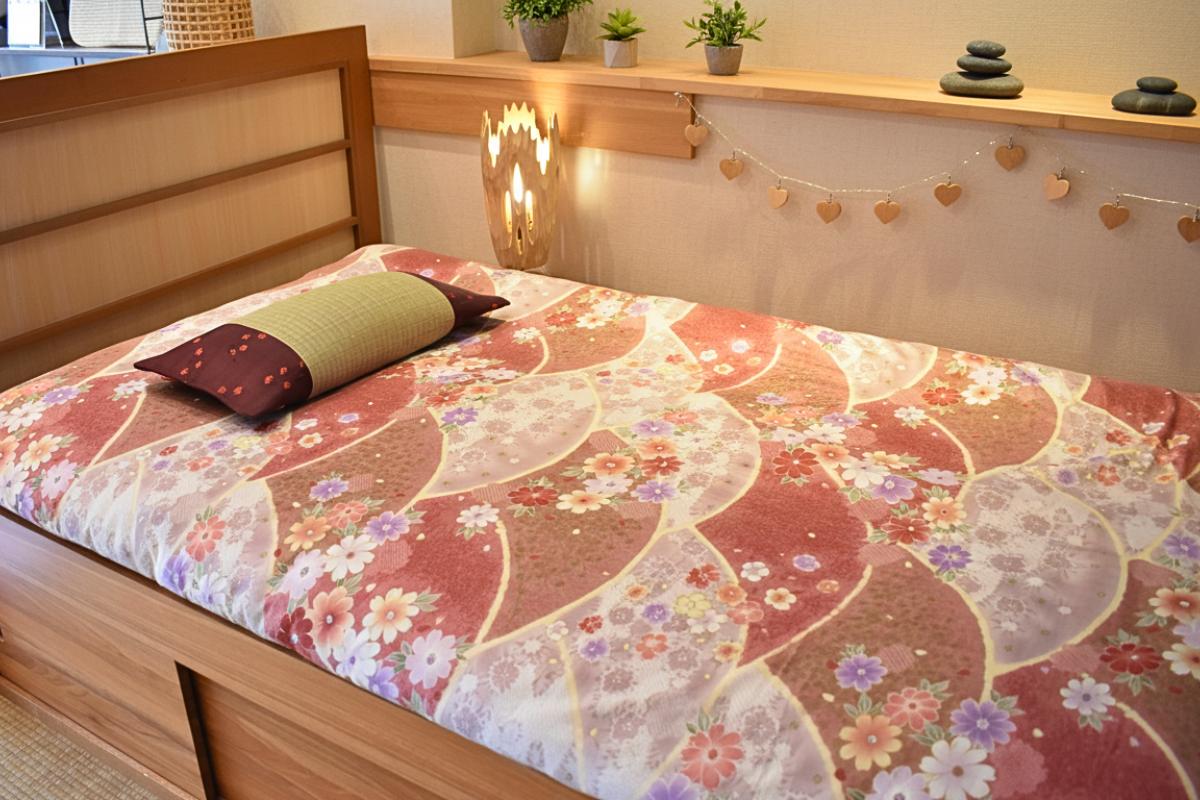
A platform bed is an elevated bed frame, typically sitting 30 to 45 centimetres off the floor, with a wooden or metal base designed to support a mattress without a box spring. The mattress on top is usually a heavy pocket spring, latex, or memory foam block anywhere from 20 to 35 centimetres thick.
While platform beds look sleeker than old-fashioned box spring setups, their core assumptions are the same: the bed is fixed, elevated, thick, and permanent. The room remains a bedroom 24 hours a day.
How They Actually Differ
| Feature | Tatami Sleep System | Standard Platform Bed |
| Foundation | Breathable Igusa grass or woven fiber | Rigid timber slats or metal |
| Mattress | Thin, firm Shikibuton or 4-Fold Mattress | Thick foam, spring, or hybrid mattress |
| Room Mobility | Folds away to clear floor space ("Ma") | Permanent fixture; occupies fixed square footage |
| Spinal Support | Neutral, firm alignment | Deep sink and contouring |
| Airflow | Passive humidity & temperature regulation | Traps heat in thick foam layers |
Why the Shift Toward Floor Sleeping Is Growing
People are increasingly questioning whether heavy furniture, thick foam, and artificial elevation actually lead to better sleep.
Better Posture & Spinal Relief: Moving away from soft mattresses helps prevent lower-back sagging. Many sleepers find that a firmer base reduces morning stiffness.
Space Maximisation: Urban apartments demand flexibility. Clearing your sleeping area in the morning turns a bedroom into a yoga studio, home office, or living space.
Passive Climate Control: Igusa grass breathes naturally, making it cooler during warm nights and insulating during colder months.
Is a Tatami Bed Right for You?
A tatami sleep system is ideal if you:
Wake up stiff on standard spring/foam mattresses.
Want to reclaim functional room space during the day.
Prefer natural, low-impact materials in your home.
It may take some time to adapt. Most people need 2 to 4 weeks for their muscles to adjust to a firmer surface. If you're curious about making the transition smoothly, explore our step-by-step guide to getting started with floor sleeping.
Ready to Build Your Setup?
Browse our Natural & Synthetic Tatami Mats
Explore our Handcrafted Shikibutons
Pair with ergonomic Makura Pillows