Every spring, Japan does something quietly extraordinary. It stops. Not because of a holiday or a deadline, but because the cherry blossoms are blooming, and everyone agrees that this is worth pausing for.
The most beautiful thing about sakura isn't the colour
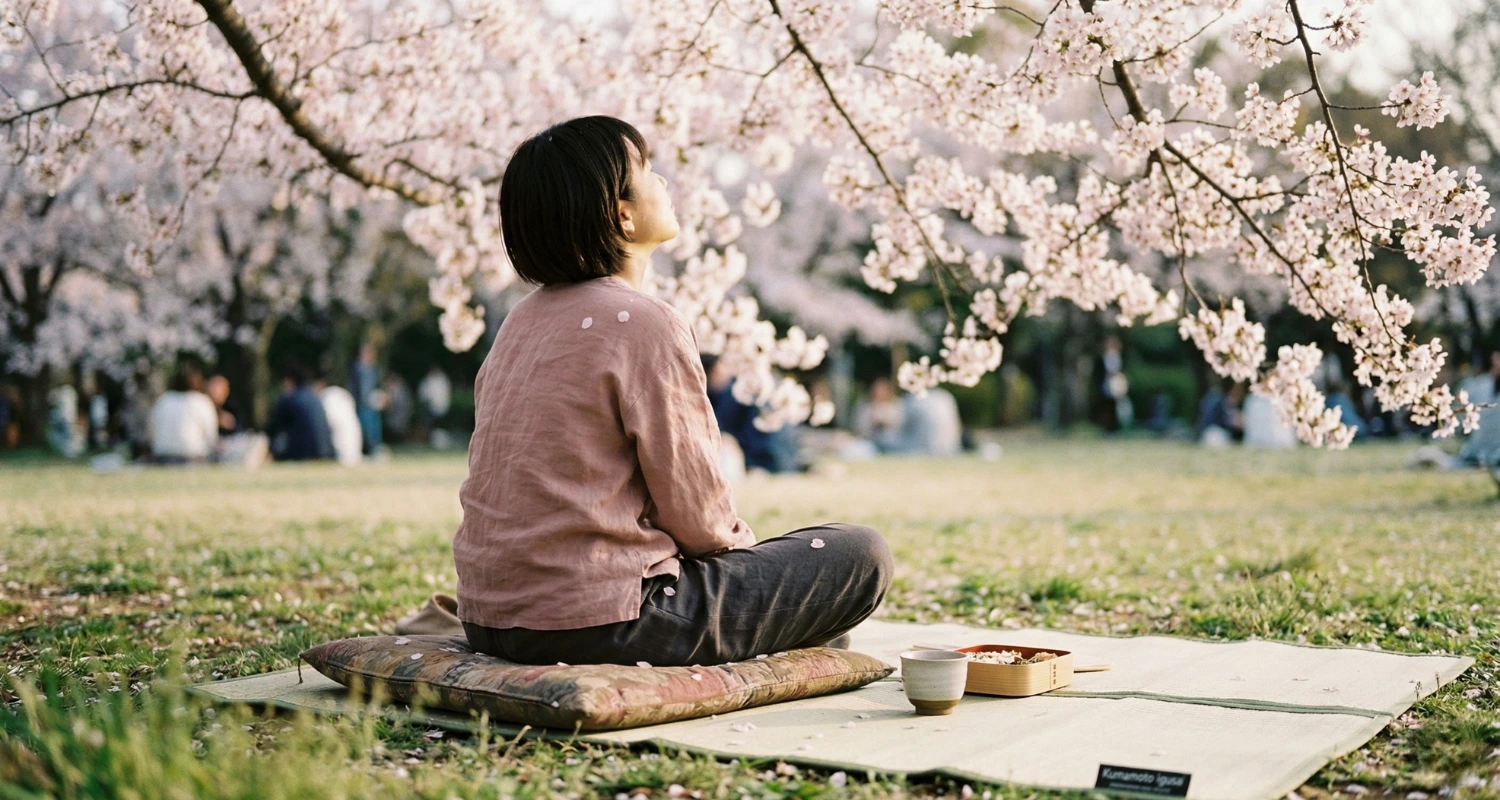
Sakura season, known as hanami, or "flower viewing", has been a Japanese tradition since at least the 8th century. Families lay out mats beneath the trees. There is food, green tea, quiet conversation, and the particular hush that comes from watching something beautiful that won't last long.
The cherry blossom blooms for roughly two weeks. Sometimes less. And that brevity is precisely the point. The Japanese concept of mono no aware (a gentle awareness of impermanence) is woven into the very spirit of hanami. You show up, you sit down, you pay attention. The petals remind you to.
Where tatami enters the picture
Here's something that often gets overlooked: the hanami experience has always been a floor-level one. You don't watch cherry blossoms from a barstool. You sit close to the ground, on a mat, a cushion, the earth itself, and let the world come to you.
This is also, in its deepest sense, what tatami has always been about. For over a thousand years, the tatami room has been the emotional centre of the Japanese home, a space for gathering, for ceremony, for resting and returning to yourself. Woven from igusa rush grass harvested by hand in Kumamoto prefecture, authentic tatami carries a faint grassy scent that researchers have found genuinely calming. It isn't just flooring. It's an invitation.
Sitting lower, living slower
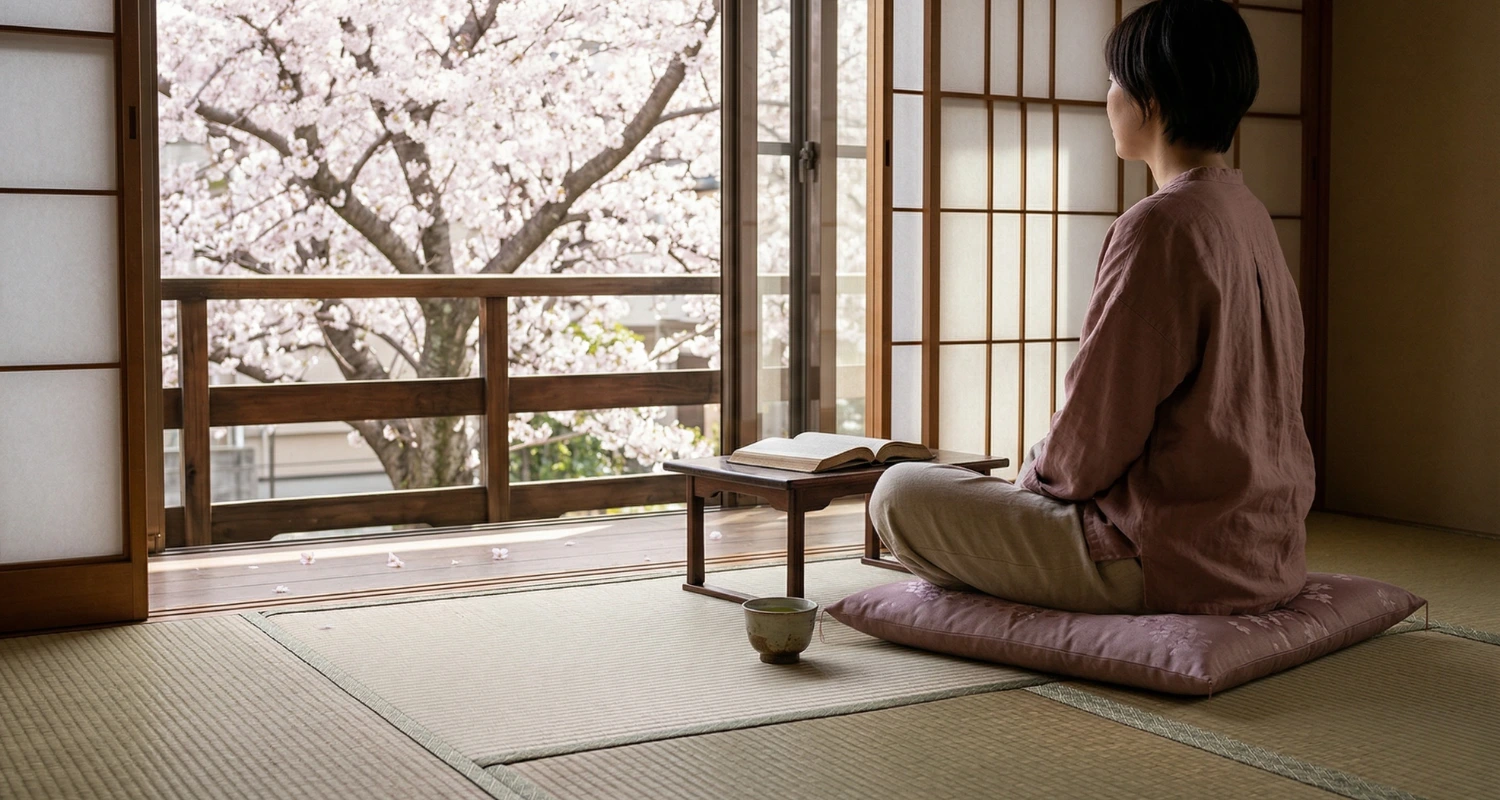
There's growing interest in the West, particularly among wellness communities, in what's sometimes called "floor-based living." The research is quietly compelling: sitting closer to the ground engages your core, supports natural spinal alignment, and encourages the kind of stillness that modern life rarely grants us.
But long before it became a wellness trend, it was simply how Japanese families lived. Meals at a low chabudai table. Meditation on a zabuton cushion. Rest on a shikibuton laid directly on tatami. The floor wasn't a last resort; it was the foundation of daily life, in every sense.
Bringing the spirit of hanami into your home
You don't need to be in Japan to feel this. The essence of hanami, presence, groundedness, the deliberate choice to pause, can live inside your own four walls, in the corner you choose to make intentional.
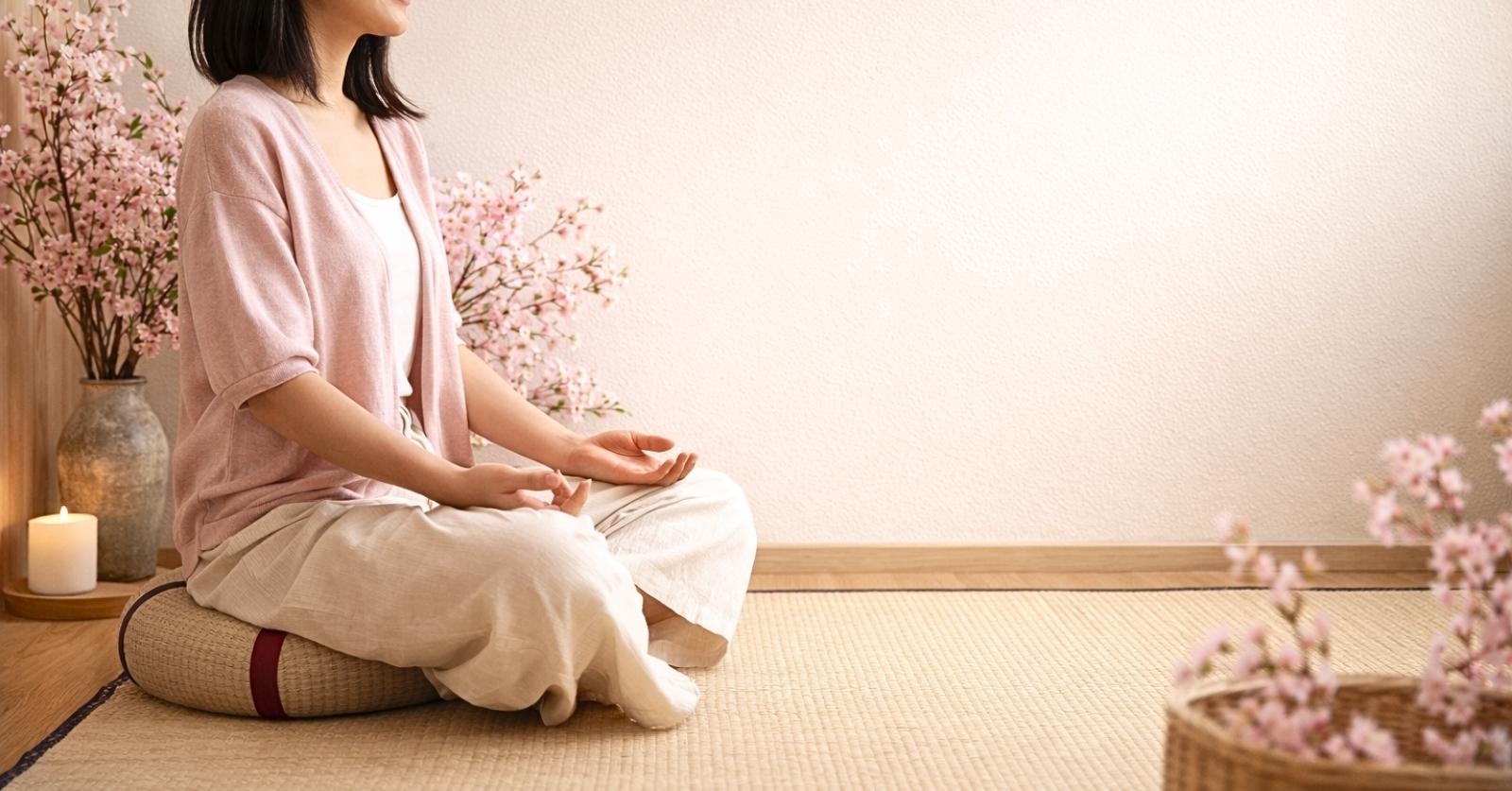
Think about a small meditation space. A tatami mat as your base layer. A Sakura Cushion, yes, named for the blossom, to settle into for morning breathwork or an evening wind-down. The scent of igusa in the air. No screens in reach. This is not a grand renovation. It's a decision, made once, that quietly changes how a room feels every single day.
At Tatami Shop, we have spent over 25 years crafting exactly these kinds of spaces, rooted in authentic Japanese materials and the belief that genuine rest is not a luxury, but a practice.
The welcoming first impression
In Japan, removing your shoes before entering a home is not just a rule; it is a ritual. You are crossing a threshold. Leaving the outside world behind. The tatami room, traditionally positioned just beyond the entryway, deepens that transition. The softness underfoot. The quiet. The sense that here, you are held.
That's what we think about when we think about home. Not a showroom. Not a backdrop. A place that welcomes you back to yourself, season after season, petal by petal.