
Most flooring is built into the house: it’s permanent, static, and often made of only synthetic materials. Tatami is different. It is an organic layer you place over your floor to change how a room feels, smells, and functions.
Because it is made from natural Igusa (Rush grass), it doesn't stay the same from the day you buy it. It goes through a specific lifecycle. If you choose a high-quality mat and treat it well, here is the decade-long story of that mat.
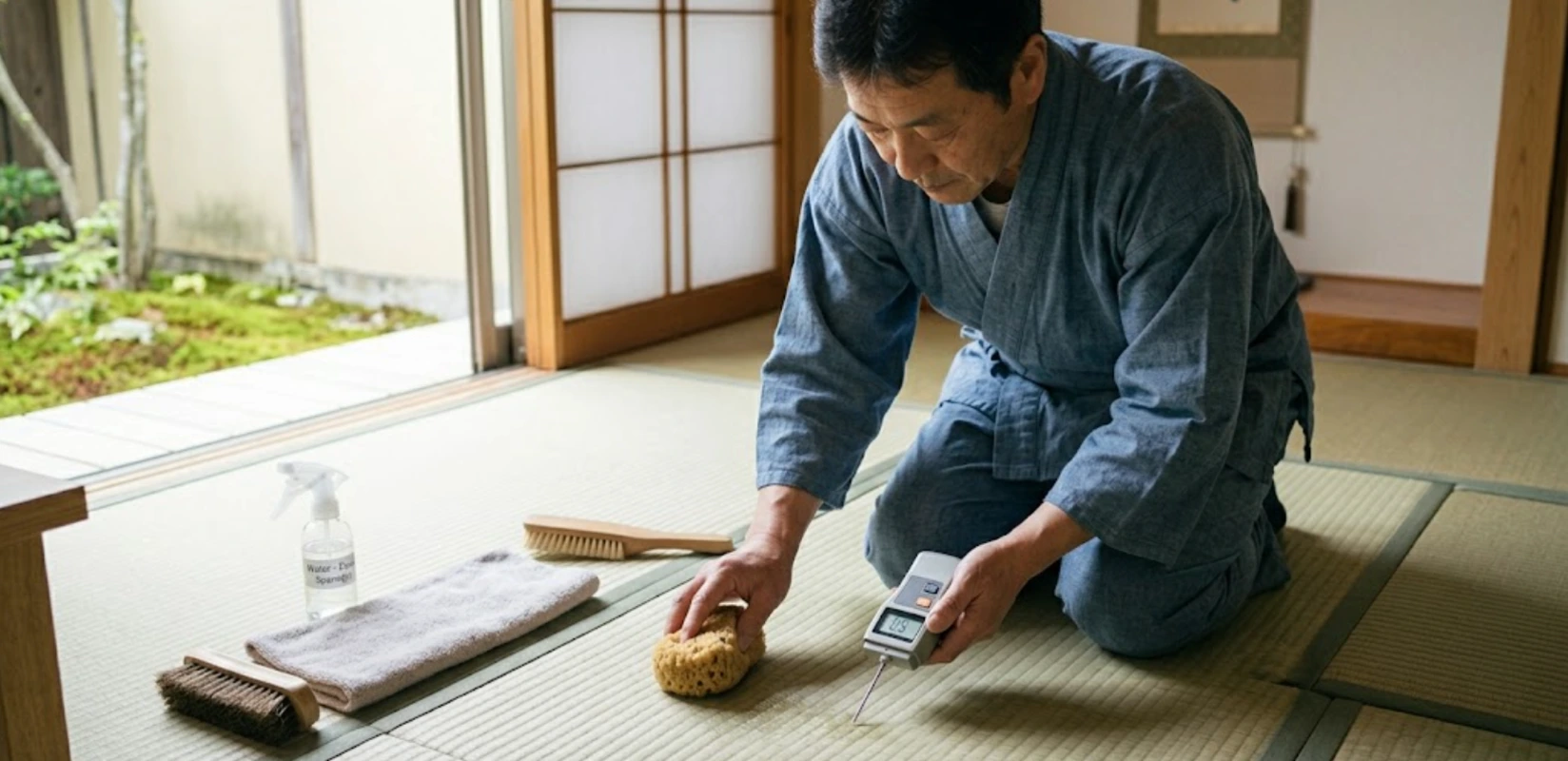
Year 1: The Green Phase
When you first lay out a new Tatami Mat, the grass is slightly green. This is its natural state. You’ll notice a distinct, grassy fragrance immediately. At this stage, the fibers are at their most flexible.
It’s important to note that because the grass is natural, it’s also at its most sensitive here. This is the year you set the tone for the rest of its life by ensuring it stays dry and isn't subjected to heavy friction.
Year 3: The Transition
By the third year, the greenish color begins to fade. It shifts into a pale, straw-like yellow. Some people worry this means the mat is "wearing out", but it’s actually just the natural aging process of the Rush grass.
The fibers have now settled. The fragrance has faded into a very light, earthy smell. If you’ve been vacuuming with the grain and keeping the room ventilated, the surface should still feel smooth and firm.
Year 5: Testing the Core
Five years in is the real test of quality. This is where you notice the difference in what's inside the mat. Cheap, lightweight mats often start to compress or feel uneven by now.
A high-quality mat with a dense core remains flat and supportive. Even after thousands of hours of use, it should still provide that signature firm support. This is the "middle age" of the mat—it’s no longer new, but it’s arguably at its most comfortable because it has adjusted to your home's environment.
Year 10: The Golden Era
After a decade, a well-cared-for mat will be a consistent golden-tan color. It has officially become a vintage part of your home.
While the grass has aged, a high-quality core should still be intact. At this point, many people choose to move the mat to a lower-traffic area or replace it to get that fresh green fragrance again. A decade of daily use is a long time for any natural material, and reaching this milestone is a sign of both good manufacturing and proper maintenance.
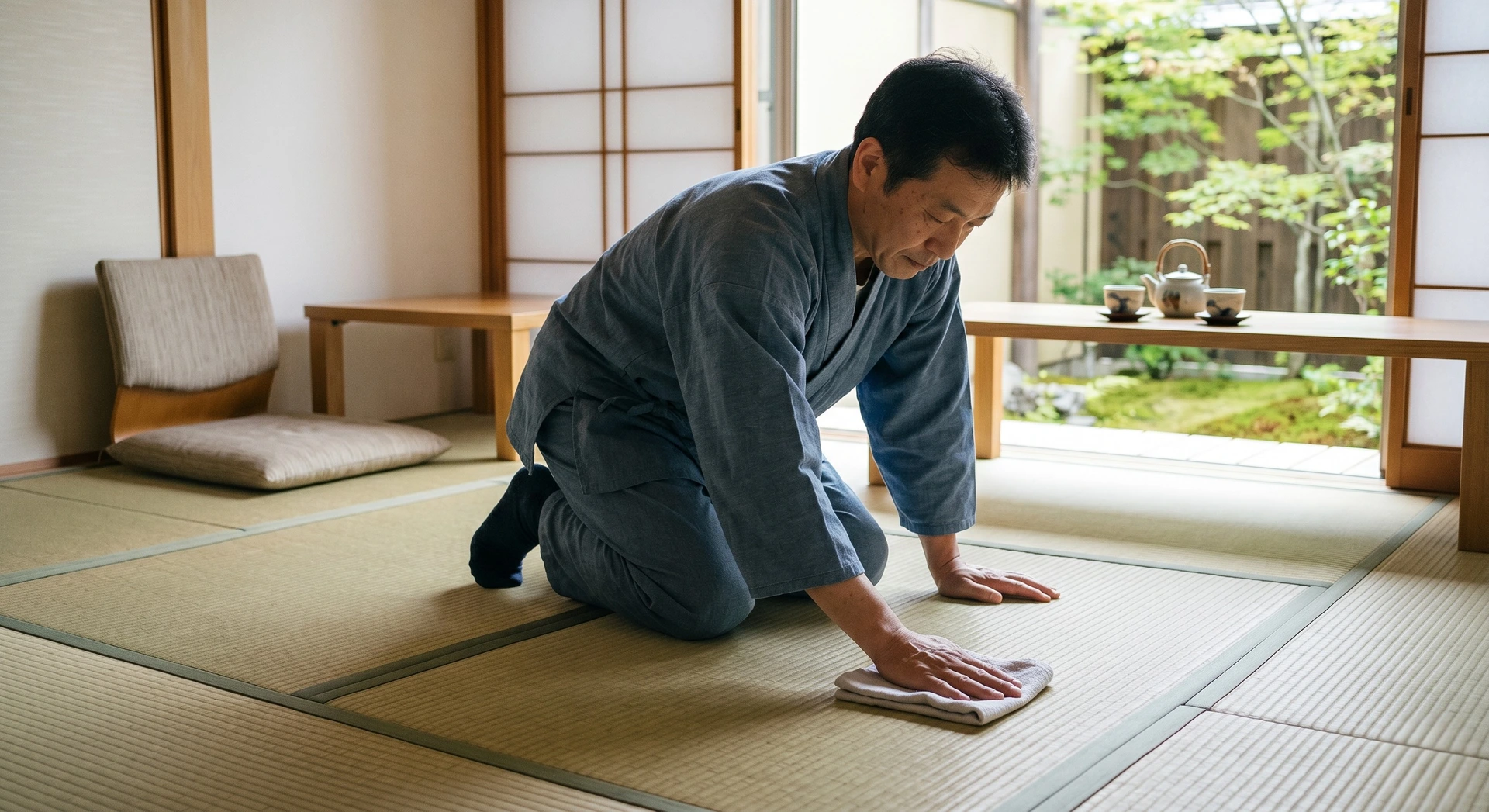
The "Proper Use" Clause
These stages ONLY happen if the mat is cared for. Humans aren’t always consistent with maintenance, but Tatami requires it.
- Moisture is the enemy: If the mat gets wet and isn't dried immediately, its lifespan will be much shorter than ten years.
- Ventilation: Tatami needs air. If it’s placed in a damp, closed-off room, it won't age gracefully.
- The Grain: Always clean in the direction of the weave.
We don't claim these mats last forever by magic. They last because they are built with dense, real materials—but they still rely on you to keep them in good condition.