
Have you ever walked into a beautifully decorated room and thought, “Wow, this looks amazing”, only to realise you would be awkward to actually sit down?
Everything is spotless. Nothing is out of place. The surfaces are perfectly smooth, the furniture looks brand new, and the whole room feels more like a showroom than a home.
Wabi-sabi offers a different way of looking at beauty.
This Japanese concept embraces simplicity, imperfection and the natural passage of time. Instead of constantly trying to make things newer, smoother or more perfect, wabi-sabi encourages us to appreciate things for what they already are.
And when brought into the home, that philosophy can make a space feel a lot more comfortable, personal and real.
So, what exactly is wabi-sabi?
Wabi-sabi is a Japanese aesthetic and way of thinking centred around the acceptance of imperfection, impermanence and simplicity.
The two words have their own histories. Wabi became associated with a calmer, simpler way of living, while sabi came to describe the beauty that develops with age and time. Together, they point towards an appreciation for things that are modest, imperfect and naturally changing.
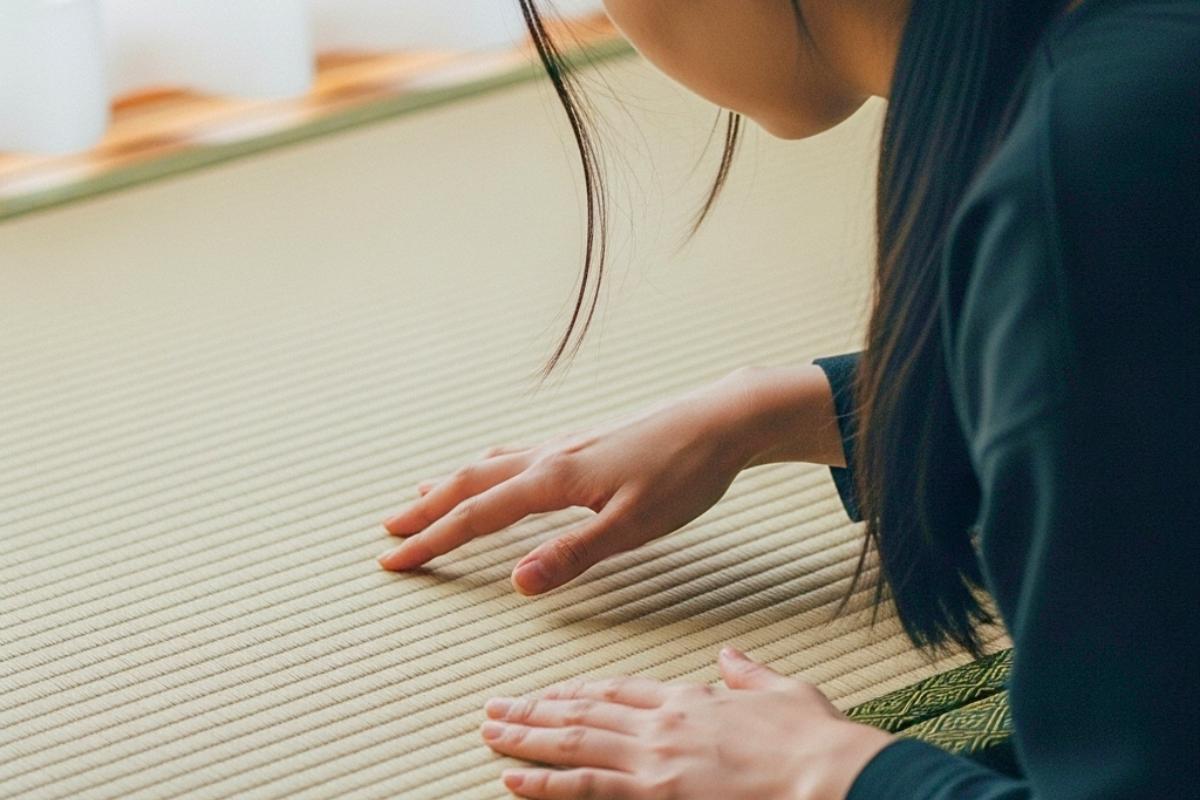
A weathered wooden surface does not necessarily need to be restored until it looks brand new. A handmade object does not need to be perfectly symmetrical. An old item can carry signs of use without becoming less valuable.
That does not mean wabi-sabi is about deliberately making things look old or unfinished.
It is more about acceptance.
Rather than fighting against every mark, wrinkle, irregularity or sign of age, wabi-sabi asks us to see character in them.
Wabi-sabi interior design is not about creating a “perfect” look
This is where wabi-sabi interior design can be misunderstood.
There is no strict checklist that says a wabi-sabi home must have beige walls, wooden furniture and exactly three decorative objects.
In fact, treating wabi-sabi as another design formula kind of misses the point.

The philosophy is more about the relationship between people and the things around them. A home does not have to look untouched. It can show signs of everyday life. It can change over time. It can contain objects chosen because they are useful, meaningful or simply pleasant to have around.
This is why wabi-sabi often pairs naturally with simple interiors.
When there is less pressure for everything to match or make a statement, individual materials and objects have room to be appreciated on their own.
The result does not have to be stark or empty. It can be warm, relaxed and distinctly personal.
Why natural materials fit so naturally with wabi-sabi
Natural materials already carry many of the qualities that wabi-sabi celebrates.
Wood brings warmth and visible grain. Stone introduces weight and a sense of permanence. Linen has a relaxed, breathable quality. Clay and other handmade materials can have subtle differences that make each piece feel individual.
Then there is Tatami.
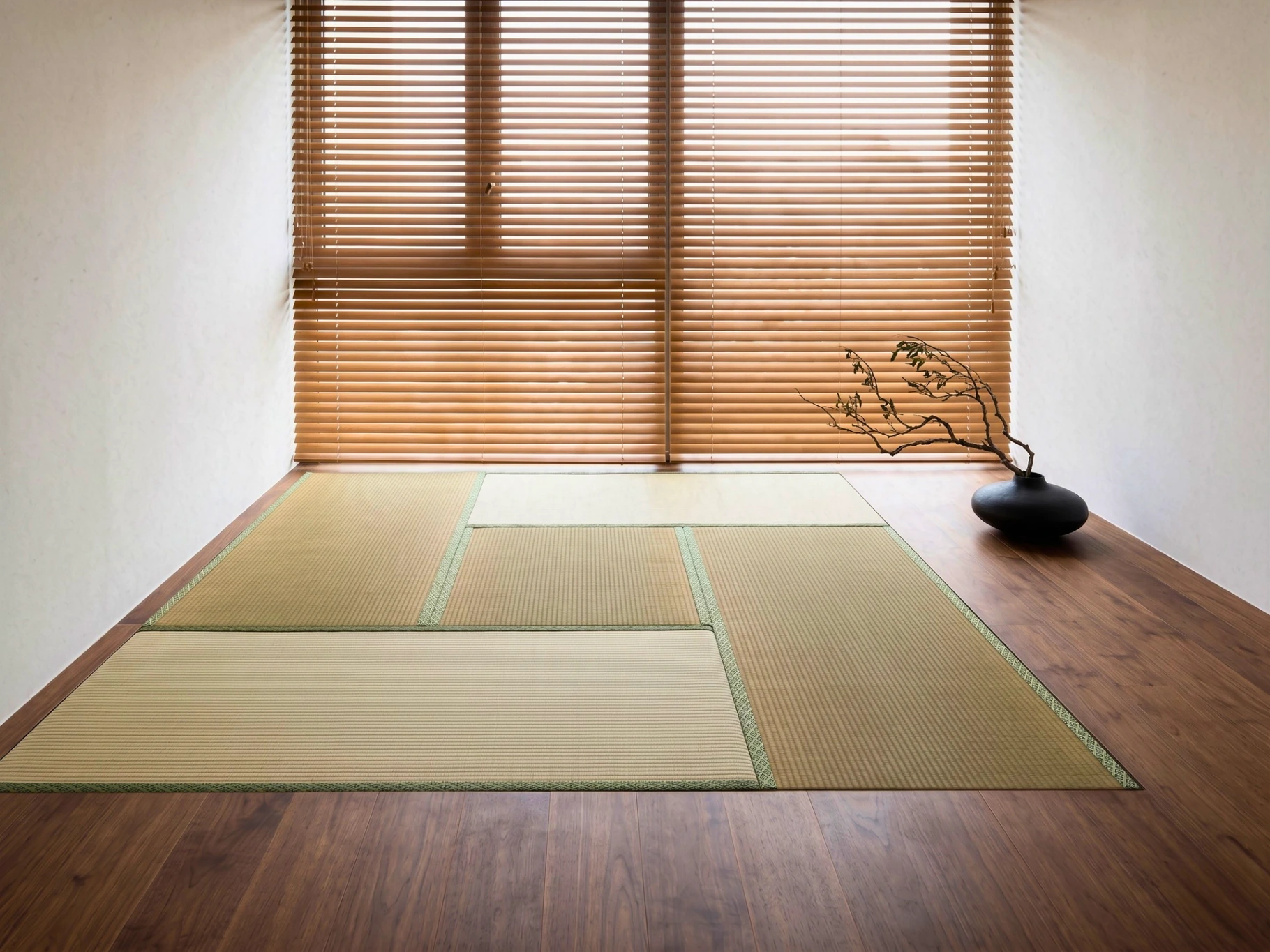
Image from Alvin's bedroom interior Project
Traditional Tatami is made with woven Igusa Rush and has a distinctive surface that immediately feels different from polished flooring. Its natural material gives it texture, while its traditional construction connects it to Japanese craftsmanship and everyday living.
Tatami also shows how natural materials can influence the atmosphere of a room without overwhelming it.
You do not need a room full of decorations when the materials themselves have something to say.
A wabi-sabi home leaves room for life to happen
Perhaps the most relatable part of wabi-sabi is that it takes some of the pressure out of keeping a home perfect.
Real homes get used.
Someone leaves a water stain on the coffee table. A favourite chair gets worn in. Wooden surfaces gradually change. Fabrics get creases. Things move around because people actually live there.
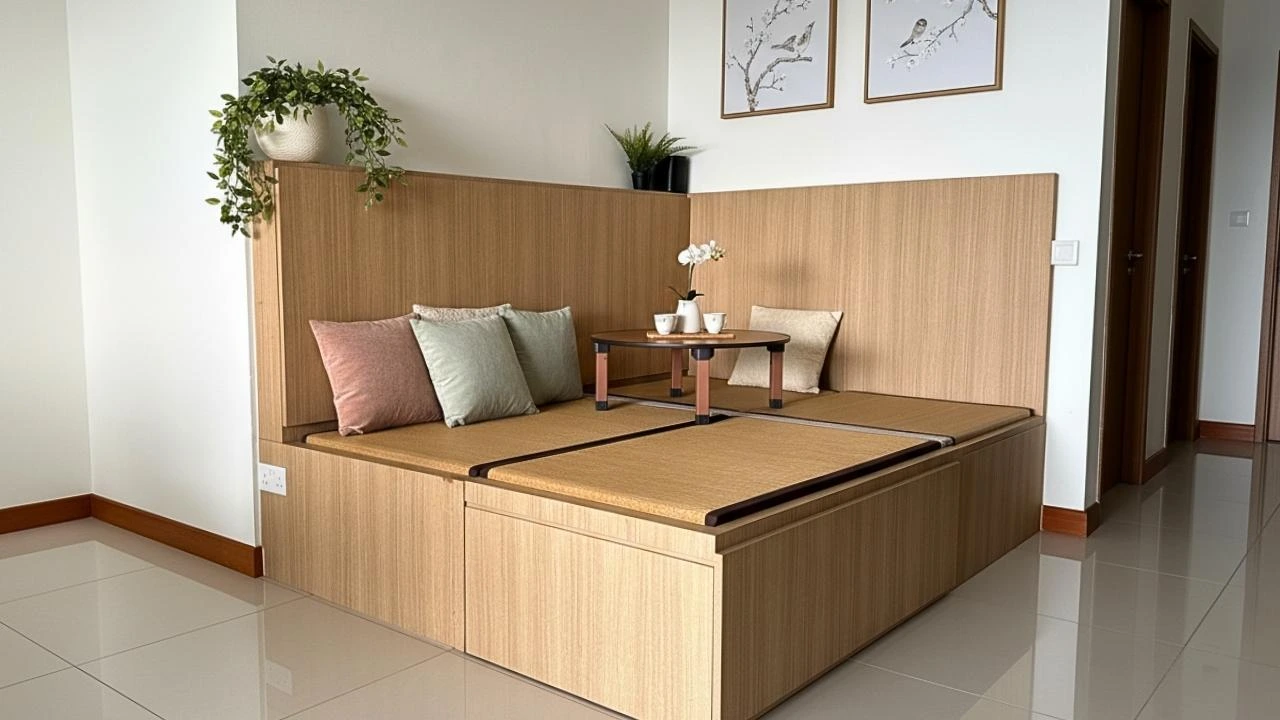
Image from Peter's living room interior Project
None of this has to be treated as a failure of interior design.
A wabi-sabi home makes space for those changes rather than constantly trying to erase them.
This is also why the concept can work beautifully alongside modern minimalist home decor. Minimalism can help remove unnecessary visual clutter, while wabi-sabi adds warmth by allowing natural materials, meaningful objects and signs of everyday life to remain.
The goal is not to create a room that looks perfectly styled in a photograph.
It is to create one that feels good even on an ordinary Monday morning.
Bringing wabi-sabi into your own space
You do not need to completely redesign your home to introduce the spirit of wabi-sabi.
Start by paying attention to the materials already around you. Could a synthetic surface be replaced with wood or another natural material? Could a bare corner become a comfortable place to sit? Could fewer, better-chosen objects make the room feel calmer?
A Tatami Mat can be one simple way to introduce this feeling. Its woven natural surface adds warmth and texture while creating a defined space for sitting, reading, resting or simply slowing down for a while.
The idea is not to chase an aesthetic.

It is to become a little more comfortable with things being what they are.
Wabi-sabi reminds us that beauty does not always come from perfection. Sometimes, it comes from simplicity. Sometimes, it comes from the marks left by time. And sometimes, it is simply found in a natural material that feels good beneath your feet.
A home does not need to look untouched to be beautiful.
It just needs to feel like it belongs to the people living in it.